Properties
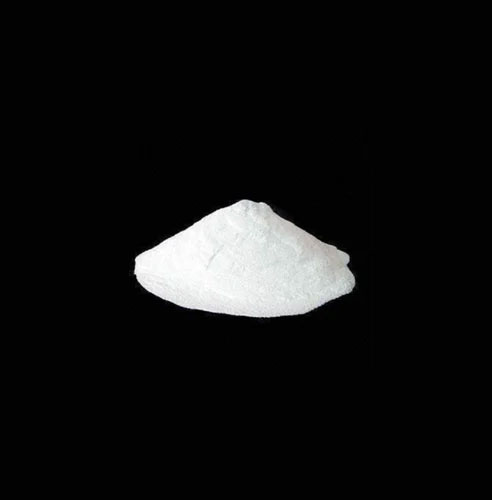
| Assay (Sb2O3) | 99.500% Min |
| Arsenic (As) | 0.05% Max. |
| Lead (Pb) | 0.05 % Max. |
| Iron (Fe) | 0.0005% Max. |
| Average Particle Size (micron) | 0.75 to 1.3 |
| Whiteness | 99.00% Min. |
| S | 0.02% Max. |
| Chloride | 0.05% Max. |
| Sulphate | 0.05% Max. |
| Insoluble in tartaric acid | 3.0% Max. |
| Residue on 325 mesh | 0.010% Max. |
| Specific Gravity | 5.2 to 5.7 |
Applications
The major use of Antimony Oxide is as a Flame retardant synergist in plastics, rubber, textiles, adhensives, fibreglass & paper. Glass manufacturers use it as a fining agent or as degasser (to remove bubbles).
Porcelain and enameling services use it as an opacifier. Paint manufacturers use Antimony Oxide as a white pigment. It is sometimes used with other materials to form yellow pigments.
Packing
Packed in 25 kilograms multiwall paper bags, 40 bags per pallet. Each pallet is stretch wrapped in polythene to prevent shifting of the bags during transit.
The major use of Antimony Oxide is as a Flame retardant synergist in plastics, rubber, textiles, adhensives, fibreglass & paper. Glass manufacturers use it as a fining agent or as degasser (to remove bubbles).
Porcelain and enameling services use it as an opacifier. Paint manufacturers use Antimony Oxide as a white pigment. It is sometimes used with other materials to form yellow pigments.
Packing
Packed in 25 kilograms multiwall paper bags, 40 bags per pallet. Each pallet is stretch wrapped in polythene to prevent shifting of the bags during transit.